
Affiliate Disclosure: As an Amazon Associate, I earn a small commission from qualifying purchases, at no extra cost to you.
If you’ve ever wondered how to organize a small closet when there never seems to be enough room, I completely understand.I spent years trying to make my tiny, awkward‑shaped closet work,but somehow my clothes always ended up crammed together,shoes scattered on the floor, and those awkward corners that somehow never seemed useful.
For a while, I thought the answer was simply buying more storage. That didn’t always go according to plan.
I bought things that looked perfect online, tried squeezing standard furniture into strange spaces, and rearranged everything more times than I’d like to admit. A few weeks later, I’d be back where I started.
Eventually, I realised that my closet didn’t necessarily need more space. I just needed to use the space I already had much better.
Once I started working with the shape of the closet instead of fighting against it, things became much easier. A few smart storage additions, some simple zoning, and a handful of habits made a bigger difference than I expected.
So if your small closet is driving you slightly mad, here’s what finally worked for me.
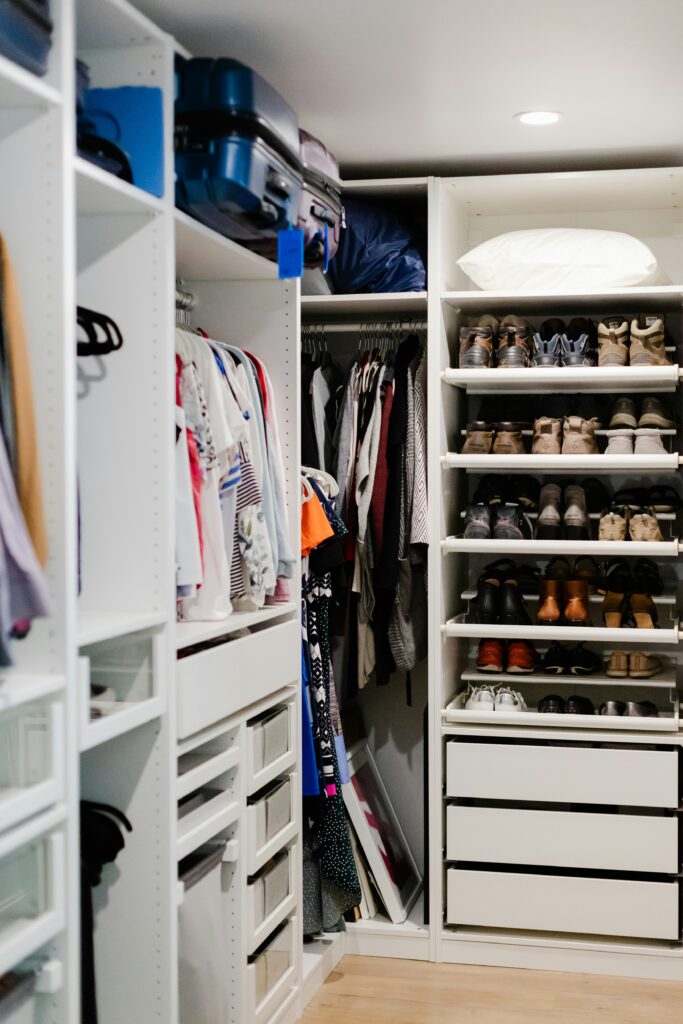
Use Smart Add-Ons to Gain Space in Awkward Corners
For a long time, I kept making the same mistake: trying to squeeze ordinary furniture into awkward spaces. It never really worked because some pieces just didn’t belong there.
It might technically fit. That doesn’t mean it’s useful.
In a small or oddly shaped closet, those awkward spaces matter. Instead of forcing standard furniture into them, look for add-ons that are made for tight or sloped areas.
Wall-mounted or stackable drawers can make use of awkward under-eave areas. Over-the-door organizers give you extra vertical storage without using up precious floor space. Adjustable shelving can also be handy when the ceiling slopes or the available height varies.
Before buying anything, measure.
Seriously. I learned this one the annoying way.
I’ve bought storage items without measuring, and they wouldn’t fit my odd‑sized corners.
Measure your angles, check your ceiling height, and work out exactly how much room you have. It’s much easier to choose storage that fits the room than to buy something first and then wonder why the door won’t open properly.
For storage that actually goes inside the closet, stick with accessories designed for the dimensions and shape of that particular space.
When selecting these organizers, I’d also pay attention to the material.
Ventilated materials such as wire grids or perforated plastic allow air to circulate. That can be helpful in a tight, dark closet where fully enclosed storage can sometimes leave things feeling a bit stuffy. Solid wood and fully enclosed bins don’t offer the same airflow.
I also like lighter-colored finishes for small spaces. They reflect the available light and can make a cramped closet feel less like a cave.
And if you’re using wall-mounted units, make sure they’re anchored securely into studs. This is especially important if you’re storing heavier things such as winter sweaters or stacks of denim.
Nobody wants to open the closet door and find the storage system slowly trying to pull itself off the wall.
A secure setup protects your belongings and, just as importantly, gives you a bit more confidence that everything will stay where you put it.
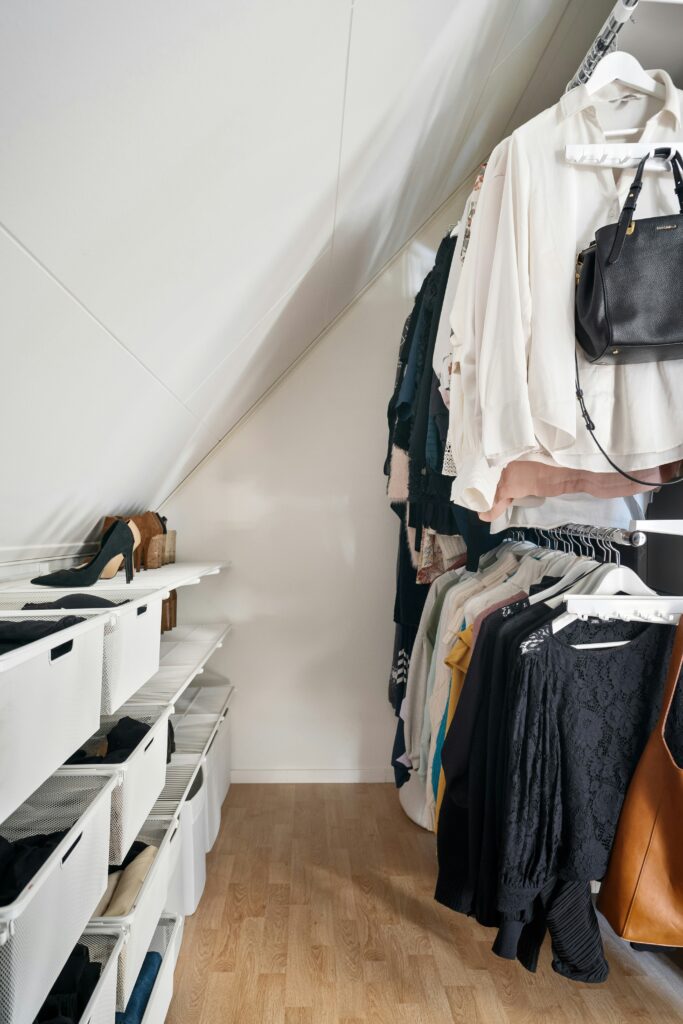
Zone Your Closet for Function — Not Just Looks
I used to think that if everything looked tidy, the job was done.
Not quite.
A closet can look beautifully organised and still be a pain to use. If I have to dig through three piles every morning to find the shirt I want, the system clearly isn’t doing its job.
That’s why I’ve found it much more helpful to divide the closet into three simple zones.
- Top Zone (The Archive): Keep this area for off-season clothing, spare bedding, or things you rarely use. Because you’re not reaching for these items every day, they can stay out of the way without disrupting your routine. Labeled canvas bins or zippered storage bags help keep dust off everything and maintain freshness.
- Middle Zone (The Daily Driver): This is the prime spot, so give it to the things you actually wear. Hang everyday shirts, dresses, and jackets on slim, non-slip hangers. They take up less room and help stop clothes from sliding into messy piles. Keep your most frequently worn pieces around eye level too. It makes getting dressed in the morning a little less frustrating.
- Bottom Zone (The Bulk Storage): Use the lower area for shoes, handbags, and bulky knits. Pull-out drawers or open cubbies make it easier to see what’s there without having to empty everything first. A small tray or catch-all bin can also keep loose things such as belts, scarves, or gym gear from ending up all over the floor.
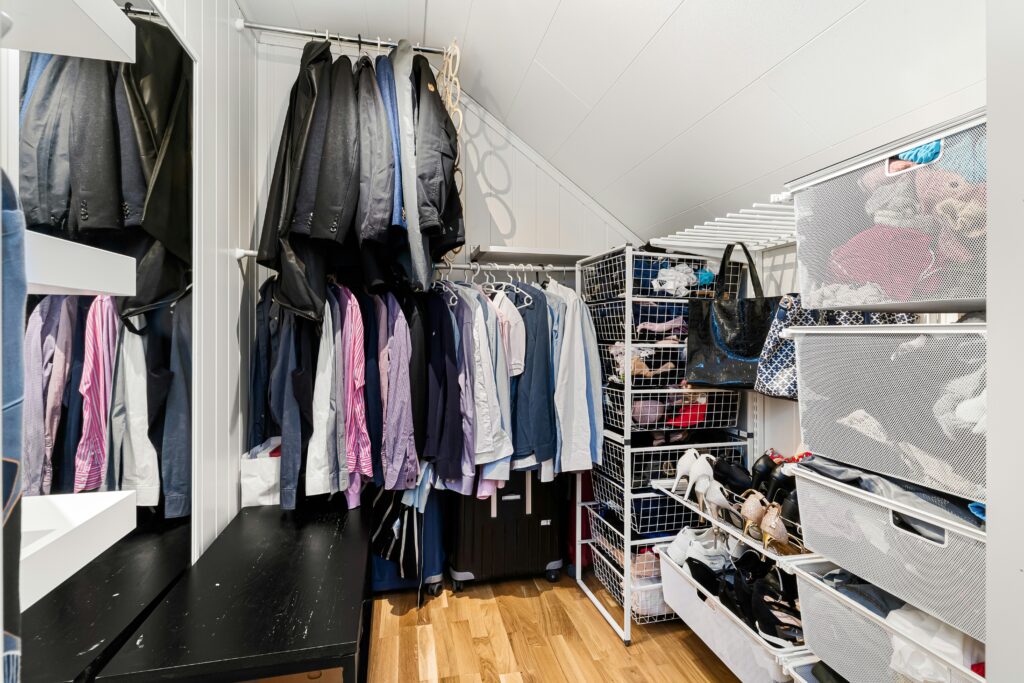
Maintain Your System with 5-Minute Weekly Habits
This is the part I used to underestimate.
Getting the closet organised feels great. Keeping it organised is another matter.
I’ve had the lovely “look at me, I finally sorted the closet” moment before, only to watch the whole thing slowly unravel again. It doesn’t take much. A few rushed mornings and suddenly shoes are on the floor, hangers are everywhere, and something I’m looking for has disappeared behind a pile of clothes.
The answer isn’t another massive organising session every few months.
It’s a few small habits that stop the mess getting out of hand.
- The Sunday Reset: Spend five minutes every Sunday putting things back into their designated zones. It’s a tiny job, but it stops little bits of clutter from turning into a much bigger weekend project.
At first, I kept skipping this quick weekly tidy‑up, and the mess would creep back much sooner than I thought.
- The Hanger Audit: Once a month, take a quick look at your hangers. Swap bulky plastic ones for slim, velvet-coated versions to gain hanging space and create a more streamlined look. It also makes it much easier to spot the shirt you’re actually looking for.
I once bought cheap hangers that bent right away under heavy winter sweaters, so I skip the lowest-cost options these days. - Seasonal Swaps: Every three to four months, rotate your wardrobe. Move off-season clothing to the top shelf or storage bins, then bring current-season pieces down into the middle zone. Your everyday view stays much less cluttered this way.
I usually pack my out-of-season clothes into vacuum-sealed bags and keep them on the top shelf. When I need them again next year, I simply bring them back down. It saves a good bit of space and keeps the clothes clean. - The One-In, One-Out Rule: When you buy a new item of clothing, consider donating or discarding an old one. This helps prevent the slow build-up of clothes you no longer need and keeps your closet closer to the way you actually live now.
Of course, there are a few clothes I just can’t let go of, even when they’re old. - The Floor Sweep: Once a week, give the closet floor a quick sweep. Put stray socks, fallen hangers, and misplaced shoes back where they belong. A clear floor is one of the quickest signs that the rest of the closet is still under control.
After struggling with a small closet for years, I’ve stopped wishing it were bigger.
Would a little extra space be nice? Absolutely.
But I’ve found that using the space properly makes a much bigger difference than I expected. When the awkward corners have a purpose, everyday clothes are easy to reach, and the floor isn’t covered in random things, the whole room feels easier to live with.
You don’t need a luxury walk-in closet to get there.
Start with one area. Grab your tape measure and deal with the zone that annoys you most. You don’t have to turn the entire closet upside down in one afternoon.Well, I usually try to get a bit of tidying done while the kids are playing in the evening. Otherwise, I’ll get everything looking nice, only for them to mess it all up again. Kids really are the biggest challenge when it comes to keeping the house tidy!
In fact, I wouldn’t recommend it.
Progress is much easier to maintain when you make a few changes at a time. Keep the pathways clear, give different types of items their own logical zones, and spend a few minutes each week putting things back.
Those little jobs really do add up.
And in the end, a well-organized closet isn’t just about squeezing in more clothes. It means less searching, less frustration, and one less annoying thing to deal with when you’re trying to get out the door in the morning.
One well‑rated storage option you may want to consider is the HOKEEPER unit. It’s a little different from those built‑in closet add‑ons. It’s a freestanding rolling wardrobe unit, so it’s better thought of as extra clothing storage that sits alongside your existing closet rather than something you install inside it.
That can be useful if your closet simply doesn’t have enough room and you have another spot nearby for a freestanding unit.
If you’d like to see the organizers mentioned in this guide and skip the endless scrolling on Amazon, I’ve linked my top picks here:Shop the Closet Organization Essentials on Amazon UK →