
This is exactly the kind of frustration I kept seeing in hundreds of shopper reviews, and it’s why I put together this Tidysles 4-Pack wardrobe storage organiser review. I went through the real-world feedback on the Tidysles storage bins to see whether they actually make this everyday mess easier to deal with. They promise easy pull-out visibility without the price tag of a custom closet system. But are they sturdy enough for everyday use, or are they just another plastic organiser that looks better in the photos than it does at home?
Product descriptions can make pretty much anything sound great. I’ve lost count of how many times I’ve ordered something just by looking at the product listing, and then been totally disappointed when it arrived. What matters more is what happens after people actually start using the baskets. So, let’s see what real buyers had to say.
What Is the Tidysles 4-Pack Organiser?
The Tidysles set gives you four foldable white plastic baskets that slot together to create a stacked, pull-out storage system. The product listing shows dimensions of roughly 33 cm deep × 43 cm wide × 18 cm high, so they’re designed for open shelves, cupboards and similar storage spaces — but it’s worth measuring your shelf depth and door clearance first. A few buyers found the units a little deeper than expected.
Trust me, forgetting to measure is such an easy mistake to make. I’ve seen so many people have to return things because they didn’t check the measurements first. And yeah… I’ve done it too.
-
Stackable, space-saving layout – the four baskets slot together for two- or three-tier shelving; best for lighter items like tees, socks and accessories. No tipping reported if you don’t yank the bottom basket too far.
-
Fold-flat when not in use – collapses for storage
-
Open-front access – no lids, so you see everything at a glance
-
White plastic finish – neutral enough to blend into most wardrobes
Unboxing & First Impressions (From Real Buyer Feedback)
This came up again and again. A lot of shoppers said the plastic felt thinner than they expected when they first opened the box. Naturally, that made some people wonder whether the sides would bend, crack or warp over time.
One reviewer summed it up nicely: the plastic feels a little flimsy at first glance, but once everything clicks together, it feels surprisingly solid.
I went through dozens of reviews, and I have to say, the mixed feedback really surprised me. Some people were super happy with it, while others weren’t impressed at all. That made me curious, so I spent some time analysing those comments to spot clear patterns‑‑what people liked, what they didn’t, and what kept coming up again and again.
Tidysles 4-Pack Wardrobe Storage Organiser Review: Key Takeaways
This Tidysles wardrobe storage organiser review finds that the baskets work well for light, regularly-used items, as long as you measure your shelves first and don’t overload them.
But seriously, remember this one thing.
The Pros: What I Loved After Reading Hundreds Of Reviews
After going through hundreds of verified shopper reviews, here’s what stood out to me most:
1. Visibility Changes Everything
This is the big one. I kept seeing the same thing come up in the reviews, just worded a little differently: I stopped digging through a stack.
Once your clothes are separated into individual pull-out baskets, you can see everything at a glance. No more digging around for that one blue tee. We’ve all been there, right?
One repeat buyer put it pretty simply: she used her third set in a craft room for acrylic-pour painting supplies, then planned to use another one at the bottom of her wardrobe. That kind of cross-room use is a good sign that the format works for more than just folded clothes.
2. Space-Saving Without Screws
Renters, this one’s for you! These baskets create an extra “false floor” on deep shelves, and you won’t need to drill a single hole. Lots of shoppers liked this simple way of getting more usable storage space inside deep cupboards.
Instead of having that dark, forgotten space at the back, you suddenly have two fully usable layers.
If you’re renting, I’d always go for storage that doesn’t require drilling. Let’s be honest, the last thing you want is a wall full of holes when you move out — and your landlord probably won’t be too happy about it either.
3. Multi-Room Versatility
-
Bedroom wardrobes (tees, skirts, accessories)
-
Bathroom cabinets (toiletries, under-sink cleaning supplies)
-
Craft rooms (paint tubes, brushes, small tech bits)
-
Air cupboards/linen shelves (towels, bedsheets)
One buyer summed it up: Great for what I need it for. That’s probably the fairest description. It’s not some miracle storage solution, but it is a solid light‑item organiser that can work in several rooms.
4. Fold-Flat = Move-Friendly
5. Price vs. Performance
The Cons: The Downsides You Need To Know Before You Hit Buy
Okay, now for the downsides.
No product is for everyone. And while there’s plenty to like here, there are a few things that came up repeatedly in shopper feedback:
1. Light-Gauge Plastic = Light Items Only
2. Slide Motion ≠ Full-Extension Drawer
-
You can’t pull a basket fully out like a kitchen drawer
-
Pull the bottom basket too far, and the upper section can tip backward
-
Several buyers described it as “awkward” for frequent, hurried access
Visibility beats full-extension drawers for light daily items. Tees, socks, scarves and gym kit go in, you can see them all at once, and you pull the basket out part-way to grab what you need.
They’re not a replacement for a smooth-glide dresser drawer. For light things you reach for every day, though, the front-facing layout does the job.
3. Measure First or Regret It
Here’s one mistake I saw come up over and over again: don’t skip measuring your shelves before ordering. It can save you a very annoying return.
Quite a few shoppers received their bins only to run into problems like these:
-
The basket stuck out past the shelf edge
-
It bumped against the wardrobe door when they tried to close it
-
It wouldn’t fit in the gap between the shelf and hanging‑up clothes
-
Shelf depth (front to back)
-
Shelf height (clearance above)
-
Door clearance (how far the door swings, whether it’ll hit a protruding basket)
A quick tape-measure check can save you so much hassle!
Who Should Buy These (And Who Shouldn’t)
✅ You’ll probably like these if:
-
You rent and can’t install built-in shelving
-
Your wardrobe shelves are deep but underutilised
-
You mostly store light items (tees, socks, accessories, toiletries)
-
You want a visual system where you can see everything
-
You reorganise seasonally and want something collapsible
❌ Skip these if:
-
You need to store heavy jeans, hoodies, or bulk items
-
You want a smooth, full-extension drawer experience
-
You hate measuring things before buying (seriously, measure first)
-
Your shelves are already shallow or tightly spaced
Take a quick second to go over your storage needs before making your final call.
Think about what you’re actually going to put in it before you buy it. Then decide if you really need it.
Before vs. After: The Core Value Proposition
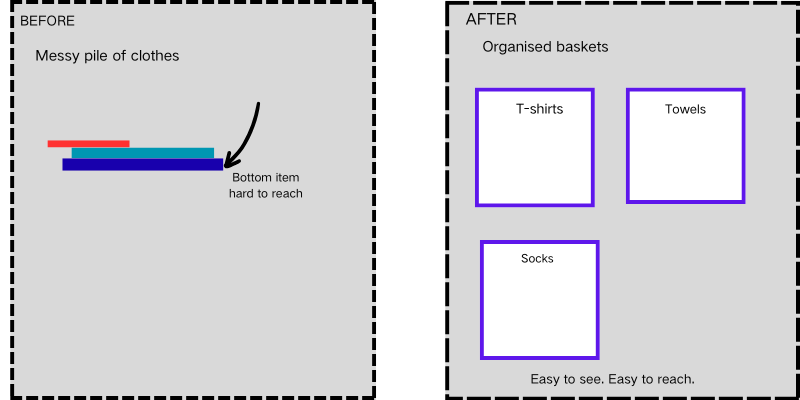
The biggest change these baskets make isn’t really about fitting more stuff onto a shelf. It’s about making the things you already own easier to see and reach.
Before, clothes get buried under each other. After that, each category has its own front-facing basket. That little bit of visual clarity can make a bigger difference than you might expect.
Sometimes, even a small organizing tool can make a bigger difference in everyday life than you’d expect.
Verdict: Are They Worth It?
At the end of the day, these are budget-friendly, renter-safe shelf organisers designed to make your clothes easier to see and reach. And yes, I think they’re absolutely worth buying — but only if you fit the right user profile.
Don’t go into this purchase expecting super-heavy-duty drawers. If that’s what you need, save your money and look elsewhere.
Here is what you should keep in mind:
-
Don’t expect heavy-duty construction
-
Do expect a noticeable improvement in how easily you find things
-
Don’t skip measuring your shelves
-
Do keep them stocked with light, regularly-used items
Where to Buy