
Pantry glass jars make it easier to see what you have at a glance. When bags of flour, cereal boxes, packets of pasta, and half-used ingredients are all piled together, it is easy to lose track of what you already have. How many times have you bought another bag of flour because you could not see the one tucked behind a stack of cereal boxes? Or found an old jar of spices at the back of a cupboard after it had already passed its best?
It is not just about having a tidy-looking pantry, either. When you cannot easily see what you have, it can be harder to keep track of ingredients, avoid unnecessary purchases, and use food before it gets forgotten.
If your kitchen is starting to feel a little chaotic, you may not need more shelves. Sometimes, changing the way you store things can make the space much easier to manage. Glass storage jars for pantry organization make it easier to see what you have, keep everyday dry goods neatly stored, and avoid digging through bags and boxes every time you need something. A matching jar system can also make the pantry feel less crowded without adding another layer of boxes or baskets.
In this guide, we’ll look at the practical benefits of glass jars, what to consider when choosing them, and how to organize them so they fit naturally into your everyday kitchen routine.
Why Glass Jars Work Well for Pantry Storage
The way they look is nice, but the practical side is what really makes glass jars useful in a pantry.
Glass is non-porous, so it does not tend to stain or hold on to food odours in the same way some plastics can. It also does not absorb flavours easily, which is useful when the same jar is used for different dry ingredients over time. That’s where airtight glass jars for dry food can come in handy, especially for everyday pantry staples. High-quality jars with airtight silicone seals can help keep moisture and pests out, which is particularly useful for foods such as flour, biscuits, sugar, pasta, and other dry ingredients.
You can see the difference with everyday staples, too. A good seal can help biscuits retain their texture, keep flour protected from moisture, and reduce the chance of brown sugar hardening. If you bake or cook regularly, keeping these ingredients in good shape can make the whole process a little easier.
Clear glass is useful when you want to keep track of how much you actually have. A quick glance tells you whether there is plenty of pasta left for another week or whether the rice is getting low, without having to dig through packets and boxes. A quick look is often enough to tell you what needs using and what you’ll need to pick up next time you shop.
Glass can also be a useful choice if you are trying to cut down on disposable packaging. It is recyclable and can be reused many times, while sturdy glass jars can remain useful for years. Moving dry goods out of plastic bags and cardboard boxes and into reusable jars can reduce the amount of packaging around the pantry. It is a fairly simple change, but small habits like this can add up over time.
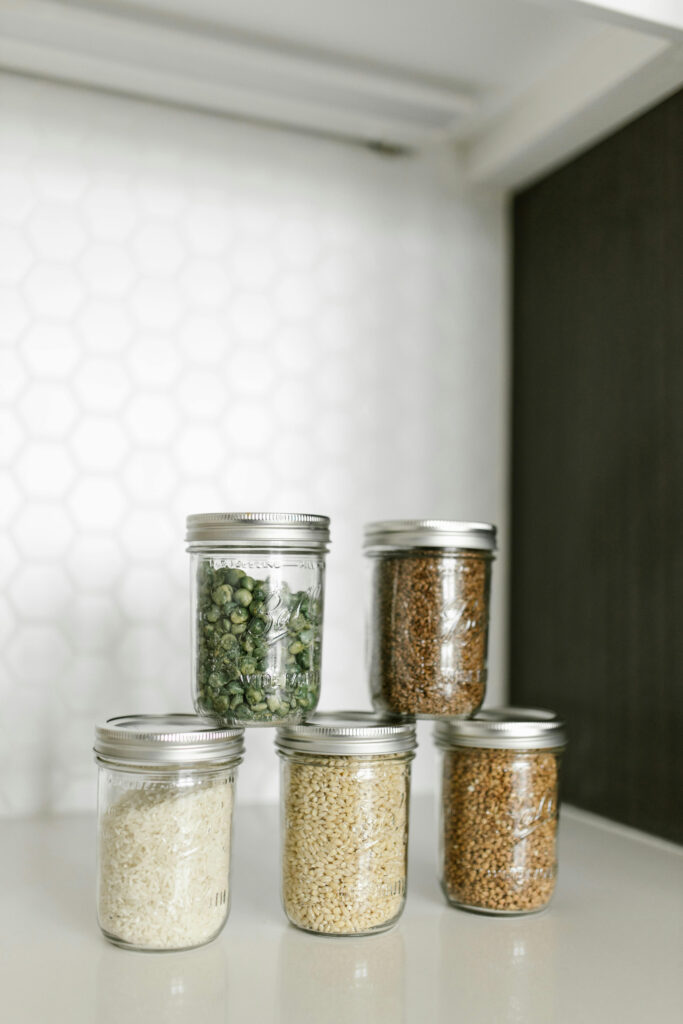
How to Choose Glass Storage Jars for Your Pantry
Not every glass jar is suited to the same job, so it helps to think about what you actually want to store before choosing your jars.
The type of glass is a good place to start. Most pantry jars are made from soda-lime glass, which is generally suitable for storing dry foods. Borosilicate glass is another option for kitchen storage, especially if you need jars that can handle greater changes in temperature. That can make it a better choice if you plan to use the jars for canning or storing hot liquids.
Then there is the lid. With bamboo lid glass storage jars, the warm, natural look can be appealing, but the seal still matters. Look for a rubber or silicone gasket if you want an airtight seal. Bamboo also needs a little care from time to time, and occasional oiling can help prevent it from drying out and cracking.
Metal lids are common on classic Mason-style jars. They are durable and can give you a good seal, although they can rust when exposed to high humidity or if they are not dried properly after washing.
Plastic or acrylic lids are another option, and you will often find them with a clamp-down bail wire mechanism. They can provide an airtight seal and are usually easy to clean. If you go for this type, check that the plastic is food-grade and BPA-free.
Once you’ve figured out the glass and lid, think about size, too.Buying a whole set of identical jars might seem convenient, but the ingredients you store can vary quite a bit in size and quantity. Large jars around 1 gallon or 4 litres can hold bulkier foods such as cereal, large bags of rice, or pet food. Medium jars in the 0.5 to 1 gallon range, or roughly 2 to 4 litres, are a good fit for flour, sugar, oats, and pasta.
Smaller jars around 0.25 to 0.5 gallon, or about 1 to 2 litres, work well for nuts, seeds, dried fruit, and snacks. Jars below 0.25 gallon are handy for smaller quantities such as spices, extracts, and homemade spice blends.
Take a look at what you already keep in your pantry, then choose jar sizes that make sense for those ingredients. It saves you from ending up with a shelf full of containers that look nice but are awkward for the foods you actually store.
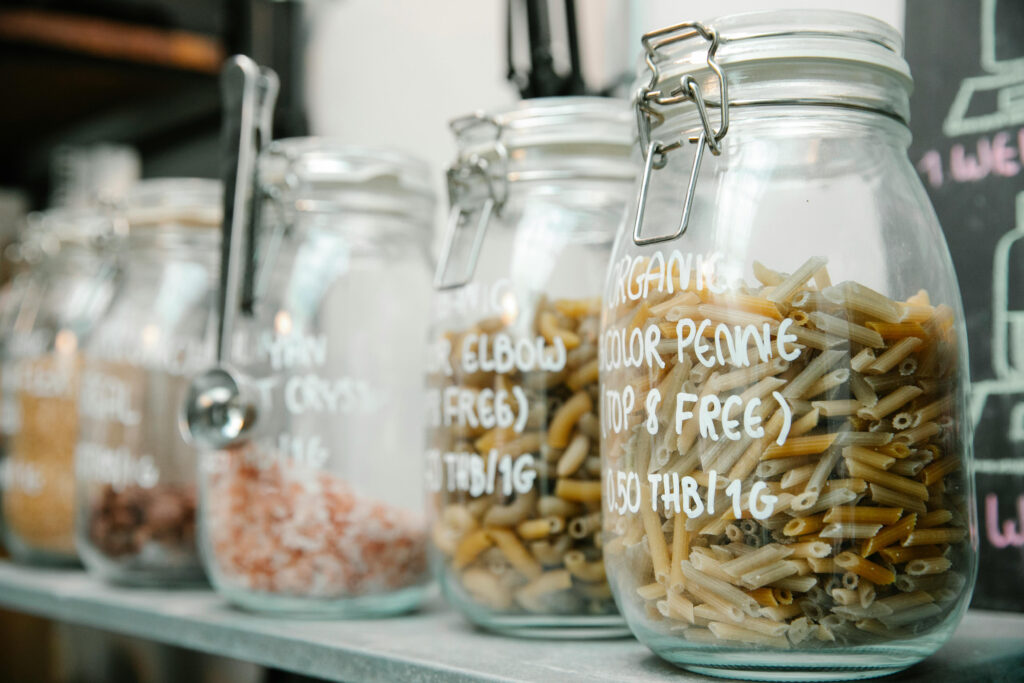
How to Organize a Pantry with Glass Jars
Once you have the jars, you can start getting the pantry in order. There is no need to tackle the whole pantry in one frantic afternoon, though. Clearing the space first will give you a much better idea of what you have and make everything else easier.
Now is a good time to check the expiry dates as you sort through everything. Get rid of anything that is stale or has not been used in the last six months, then give the empty shelves a good wipe before putting anything back.
The jars need a little preparation, too, even if they are brand new. Wash them with warm, soapy water, rinse them well, and let them dry completely before adding any food. Any moisture left inside can cause problems for dry goods, so make sure the jars are properly dry before you start filling them.
Once the shelves are clean and the jars are completely dry, you’re ready to start filling them. Take your time when pouring dry goods into the jars, especially with fine ingredients such as flour or powdered sugar. A funnel can make this much easier and help keep the countertop from getting covered in flour. A funnel can make this much easier and help keep the worktop from getting covered in flour. Glass jars with wider openings can also make filling and transferring ingredients a little less messy. Leave around an inch of headspace at the top rather than filling the jar right to the brim. This gives the contents a little room and makes it easier to close the lid properly.
Once everything is in the jars, a few simple labels can make the whole setup much easier to use. Even if you think you will remember what is in each jar, labels make things clearer for everyone else in the household. They also save you from opening three similar-looking jars just to find the ingredient you need.
For labels, you have a few simple options. Chalkboard labels are useful if you regularly change what goes into a jar, since they can be wiped clean and rewritten. A label maker gives you neat, consistent labels that are easy to read, while handwritten tags can bring a more personal, farmhouse-style feel. There is no need for every label to look exactly the same if that is not your style.
Once everything is labeled, think about where each jar will go. Everyday ingredients such as coffee, sugar, and cooking oils are easier to reach when they are kept around eye level. Bulk supplies, such as extra rice or backup flour, can sit on higher shelves where they are out of the way. Heavier items, including large jars of oil, are better kept on lower shelves, where they are easier to handle and less likely to fall.
A little planning here can save you plenty of rummaging later. A pantry that is easy to put things back into and easy to find things in is much more useful than one that simply looks tidy for a day.
Other Ways to Use Glass Jars Around the Home
Glass jars do not have to stay in the pantry. Once you see them as reusable containers rather than pantry-only storage, they can come in handy all over the house.
Mason-style jars can make simple little planters for herbs such as basil or mint on a sunny windowsill. Smaller glass jars are also handy in the bathroom for keeping cotton balls, cotton swabs, and bath salts together instead of having them spread across the vanity.
The same goes for a home office, where small glass jars can be handy for keeping pens, paperclips, and thumbtacks in one place. Giving these little bits and pieces their own container makes them easier to find and keeps the desk from getting cluttered.
If you enjoy making homemade gifts, glass jars can also be a nice way to package the ingredients for a layered cookie or soup mix. Tie a ribbon around the neck of the jar, and you have a simple DIY gift that feels a little more personal than something picked up ready-made.
That’s the nice thing about reusable storage. A jar does not have to belong to one room or have just one purpose. Once you have a few around the house, there are usually plenty of little jobs they can take on.
How to Keep Glass Jars Clean and Clear
Keeping glass jars clear and in good condition does not take much work. A few simple cleaning habits are usually enough to keep them looking their best.
When cleaning the glass, avoid steel wool and harsh scouring pads. Anything too abrasive can leave scratches on the surface over time, making the glass look cloudy instead of clear.
The lids and seals need a little attention as well. After washing them, dry the lids and seals separately from the jars so moisture does not get trapped around the edges. This also helps reduce the chance of mildew developing.
And don’t forget to check the rubber gaskets from time to time, especially if the jars are used regularly. If a gasket becomes brittle or cracked, replace it rather than continuing to use a seal that’s no longer working properly. A good seal helps keep dry ingredients fresh and keeps unwanted moisture out.
It also helps to rotate the food in your pantry as you go. The First-In, First-Out, or FIFO, method simply means using older ingredients before newer ones. When you bring home a new bag of rice, for example, use the older rice first, or move the older jar to the front and put the newer supply behind it. Once you get into the habit of doing this, it becomes an easy part of keeping the pantry organized.
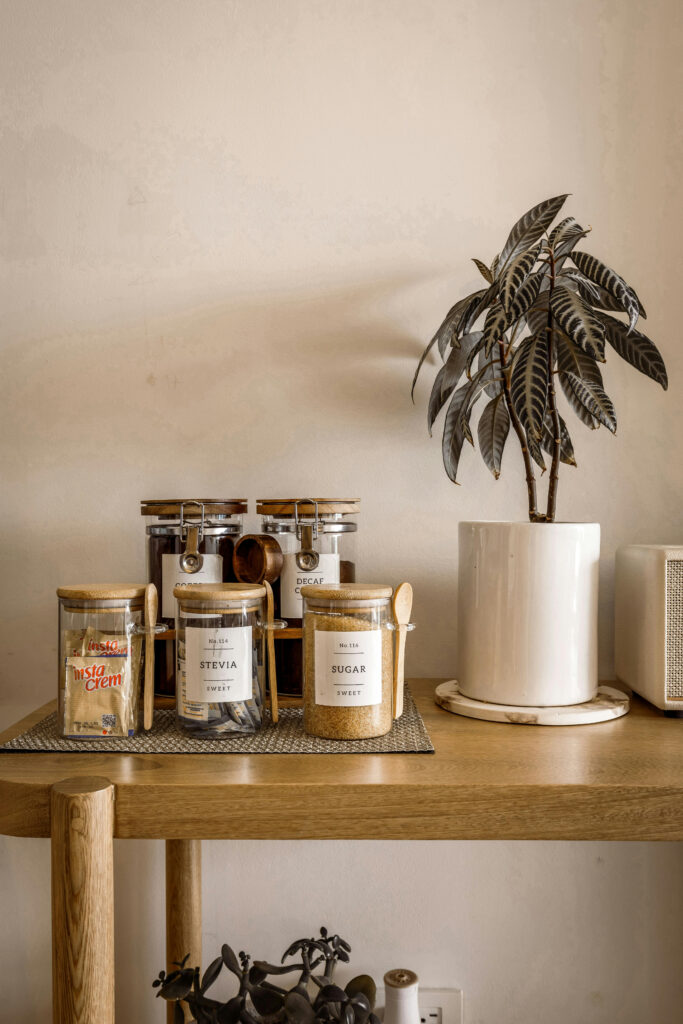
Common Pantry Jar Mistakes to Avoid
Even a well-planned jar system can become frustrating when a few simple things get overlooked.
One common mistake is filling jars right to the top. It might seem like an easy way to squeeze in a little more, but an overfilled jar can make it harder for the lid to seal properly and can lead to spills when you’re moving it around. Leaving a little space at the top makes the jar easier to close and handle.
Humidity is another thing to keep in mind. If you store jars in a damp basement or right next to a steamy dishwasher, condensation can build up inside. Dry goods generally keep better in a cool, dark, dry place, so it helps to pay attention to where you’re storing the jars, not just which jars you choose.
Looks can be tempting, too. A pretty jar can make open storage look much nicer, but I wouldn’t choose one based on appearance alone. If the lid doesn’t seal properly, the jar isn’t doing the main job it’s meant to do: helping protect the food inside. A good-looking jar is a nice bonus, but when it comes to food storage, an airtight seal matters much more.
A Simpler Way to Organize the Pantry
Moving pantry staples into glass jars can be about more than making the shelves look tidy. When ingredients are easy to see, properly sealed, and stored where they make sense, it becomes much easier to keep track of what you have and use things before they get forgotten. Even everyday meal prep can feel a little less chaotic when you’re not digging through a crowded shelf to find what you need.
After writing about home organization for a while, I keep coming back to how much these small changes can affect the way a space feels and works. You don’t always need a bigger kitchen or another set of shelves. Sometimes, simply being able to see what you have and reach it without moving everything else around is enough to make a busy pantry feel easier to live with.
And there’s no need to replace every container at once. Start with the ingredients you reach for most often, such as baking essentials, and build from there as it makes sense for your kitchen. The goal isn’t to create a picture-perfect pantry that takes forever to maintain. It’s to create a system that fits the way you actually live.
For me, that’s really what good home organization comes down to. It’s not about having more storage or making everything look perfect. It’s about making everyday tasks feel a little easier, so your home works for you instead of giving you one more thing to keep up with. Sometimes, a few simple glass jars and a little thoughtful organization are all it takes to make a busy pantry feel easier to live with.