Disclosure: As an Amazon Associate, I earn from qualifying purchases. This means if you click on my links and make a purchase, I may receive a small commission at no extra cost to you. This helps support my blog and allows me to continue creating helpful content.
Introduction
closet-organizer-buying-guide: A well-organized closet isn’t just about looking nice-it can make your daily routine so much easier and help keep your belongings in good shape. Whether you are setting up a brand-new space or giving your current closet a refresh, choosing the right organizers can feel a little overwhelming. In this guide, we’ll walk through the key things to think about before you buy, so you can choose pieces that actually fit your space and lifestyle without breaking the bank.
After reading countless home‑organizing tips and buyer feedback, I’ve learned that a comfortable, good-looking setup comes from thoughtful planning—not from repeatedly buying more and more organizers.
Good organization can also free up a little mental space. When your clothes, accessories, and everyday essentials are easy to find, you spend less time digging and more time getting on with your day. A little thought put into your setup now can also keep clutter from creeping back in later.
For me, an organized closet is about more than having a place for everything. It takes some of the everyday clutter off my mind, too, and makes life feel a little calmer, lighter, and more put together.
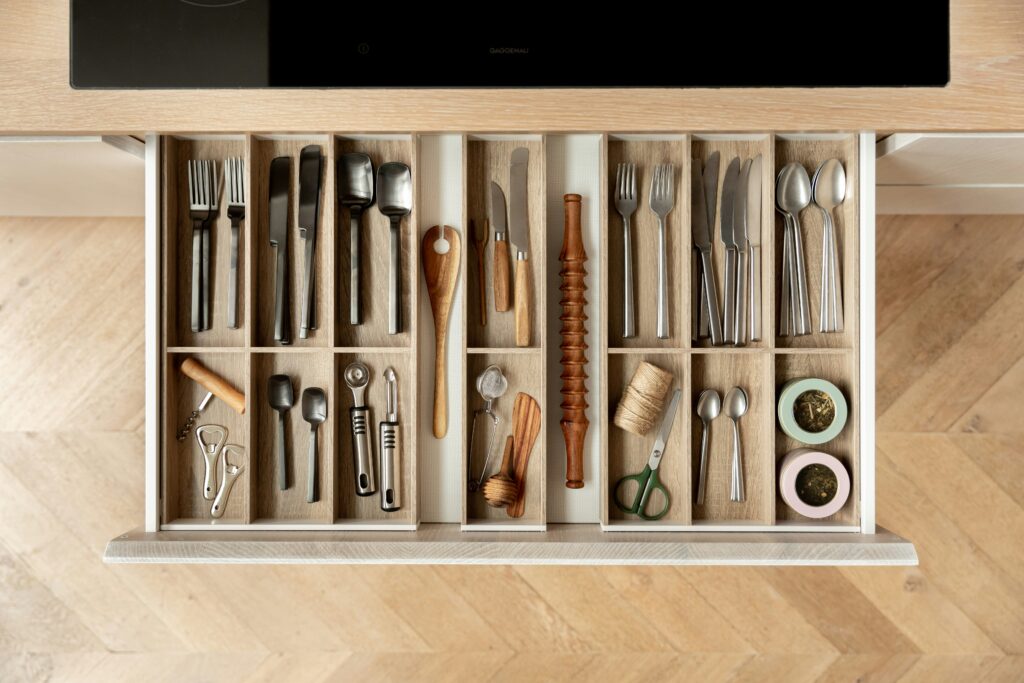
Scene illustration only (free commercial stock image), used to demonstrate drawer organization ideas, not the actual product photo from Amazon
Assess Your Space and Needs
When it comes to a closet-organizer-buying-guide, I always recommend starting with your space—not the products. Before you start adding things to your cart, take a good look at what you’re actually working with. Grab a tape measure and check the height, width, and depth of your closet and drawers. Then think about what needs a home: lots of hanging clothes, bulky sweaters, shoes, accessories, or a bit of everything? Once you know what you’re storing, it’s much easier to figure out whether you need more vertical storage, drawer dividers, or an over-the-door solution. And don’t forget those awkward corners and deep shelves—they’re often the easiest spots to overlook and the hardest to make useful.
I used to skip the measuring step, and more often than not, the organizers I bought just didn’t fit. Such a waste of money.
Your everyday habits matter, too. Do you usually get dressed in a rush on weekday mornings? Do you switch things around often as the seasons change? These little details can help you decide which storage zones need to be easiest to reach. Everyday items should be in the most convenient spots, while off-season clothing can sit higher up or farther back.
I usually stash my out-of-season clothes in vacuum storage bags and pull them out when the season rolls around again. They stay clean, dry, and protected from dust the whole time.
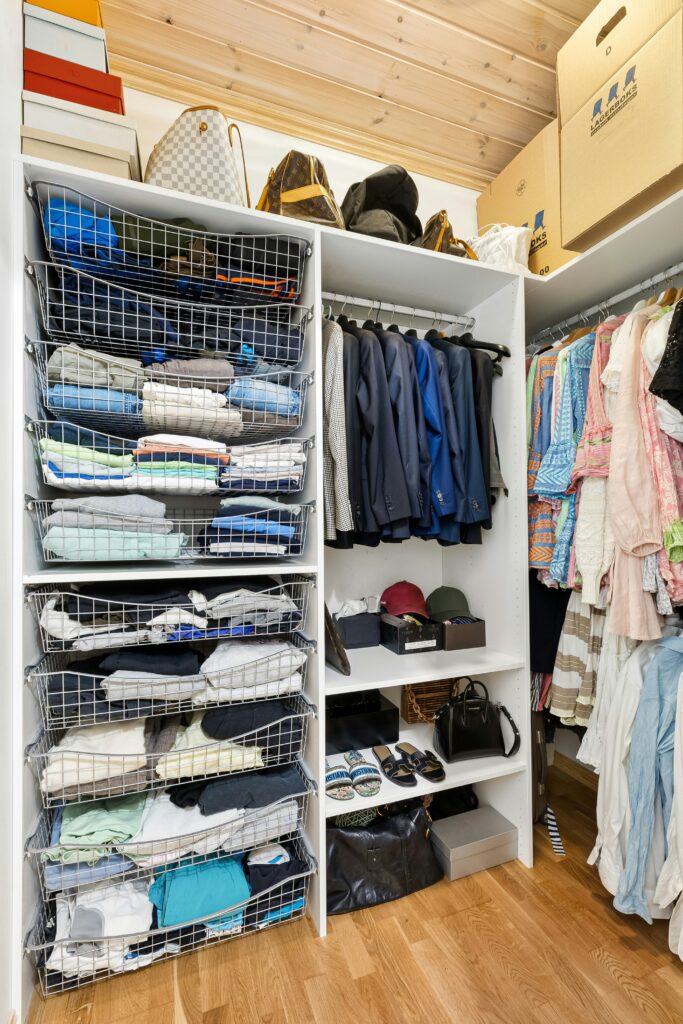
Scene illustration (free commercial image): This closet setup shows smart organization for clothes, shoes, and accessories. Not linked here — see text below for product recommendations.
Prioritize Visibility and Accessibility
One of the biggest organizing mistakes is using storage that puts everything out of sight. Instead, look for designs that let you see what you own at a glance. Open-weave baskets, clear storage bins, and open-tier closet organizers can work really well for things you use often. For drawers, adjustable dividers are especially handy because you can change the compartment sizes as your needs change. If you have to dig through a pile or move half the contents around just to find something, that organizer probably isn’t working very well for that particular spot.
Good visibility also makes your system easier to maintain. When you can actually see what you have, you’re less likely to buy duplicates or forget about things you already own. If everything is easy to see and grab, putting it back where it belongs becomes much more natural. That simple habit can make a big difference in keeping your closet organized over time.
I truly believe that keeping things visible is one of the simplest ways to keep a closet tidy over time.
Choose the Right Materials for Durability
Closet organizers come in all sorts of materials, and the best choice really depends on what you’re storing and where you live. Wire baskets are sturdy and work well for heavier items like jeans and sweaters. Wood or bamboo organizers have a warmer, more natural look and can be a great option for lighter items or folded clothes. Plastic bins are lightweight and usually easier on the budget, but look for ones that are sturdy enough to hold the weight without bending or warping.
It’s also worth considering the humidity in your home. Metal can rust in damp spaces, while plastic and treated wood tend to hold up better. Choosing the right material for your space can make a big difference in how well your organizers hold up over time.
During the rainy season, moisture can build up more easily in a closed‑off closet, so it’s worth choosing materials that suit the conditions in your home.
You’ll also want to think about maintenance. Wood may need an occasional wipe with a dry cloth, while plastic can usually be rinsed clean. Metal baskets with a powder-coated finish tend to hold up better against scratches and corrosion. Choosing a material that suits both your climate and how much maintenance you’re realistically willing to do can help your organizers last much longer.
For me, low‑maintenance materials are what make an organized home easier to live with in the long run.
Don’t Overlook Small Spaces and Corners
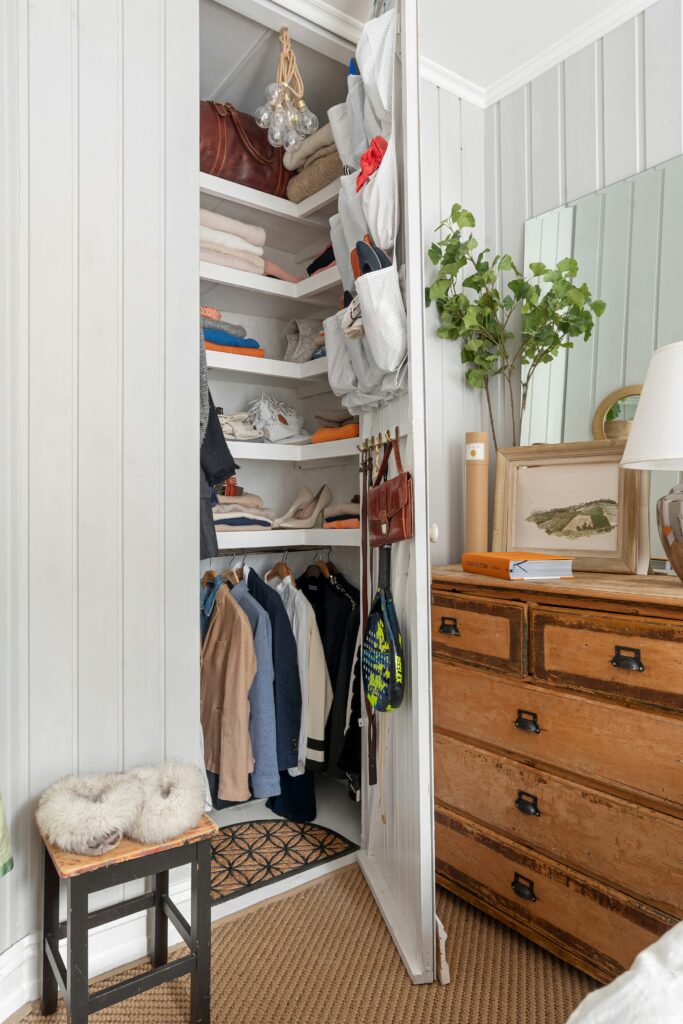
When space is tight, every inch counts. Make use of the back of the door with over-the-door hooks or racks for bags, belts, or scarves. Corner shelves and turntables are great for making use of those awkward, hard-to-reach spots in your closet. They’re perfect for keeping small accessories and everyday essentials organized while making better use of those otherwise awkward spots. My biggest takeaway: make the most of every dead corner, and the space can instantly feel much tidier.
To maximize vertical hanging space, I recommend the Fixwal 6-Shelf Hanging Closet Organizer on Amazon UK→. Its sturdy design adds six tiers of storage for folded clothes, bags, or accessories, turning wasted rod space into functional storage. The open shelving keeps everything visible and easy to grab. Check current price and latest reviews on Amazon UK .
Even the inside of a drawer can benefit from small, specialized inserts for socks, ties, or jewelry. The idea is simply to give everything a home, so clutter has fewer chances to take over and you don’t have to spend as much time deciding where things should go. This little habit of staying organized has honestly made my everyday life so much easier. It may seem like a small thing, but having a place for everything really does make the day feel a little less hectic.
For a budget-friendly way to utilize that door space, I recommend the Simple Houseware 24-Pocket Over-The-Door Shoe Organizer on Amazon UK→. Its large clear pockets let you see every item at a glance, while the non-woven fabric helps keep things protected from dust. Check current price and latest reviews on Amazon UK .
Small spaces are perfect for rotating in the things you don’t reach for all the time but still want to keep—think spare bedding, travel essentials, or meaningful keepsakes. A little labeling, whether with simple tags or just a mental note, goes a long way in helping everything stay in its place. Over time, this kind of habit keeps those tucked-away spots from turning into random drop zones. It’s a simple way to keep a closet feeling intentional, organized, and far less chaotic.
Use drawer dividers to separate small items and keep everything visible and accessible
Mastering the Art of Drawer Organization
Drawers are often some of the most underused storage spaces in a home. Without the right dividers, socks tend to disappear into the back, underwear gets tangled, and accessories quickly turn into one big jumble. The good news: adjustable drawer organizers can make a surprisingly big difference—transforming a messy drawer into something far more manageable. When you’re shopping, look for options that let you customize the compartment sizes, so you can fit everything from small jewelry to bulkier clothing.
To make this easy, I recommend the SpaceAid Drawer Organizer Bins on Amazon UK→. This 12-pack set includes multiple bin sizes, allowing you to customize the layout for socks, underwear, or accessories. It’s a well-reviewed, budget-friendly pick to keep your drawers tidy. Check current price and latest reviews on Amazon UK.
To free up rod space and prevent clothes from slipping, I recommend the KEPLIN Velvet Hangers 20-Pack on Amazon UK→. These slim, non-slip hangers feature a 360° swivel hook and a built-in tie bar for belts or scarves. They’re a well‑reviewed, space-saving upgrade for many wardrobes. Check current price and latest reviews on Amazon UK.
A well-divided drawer can do a lot more than you’d think. When different sections are separated properly, bulky items stay away from delicate ones, which helps reduce the chances of snagging, damage, or unwanted wrinkles. This same approach works in bedrooms too—keeping undergarments, sleepwear, and accessories neatly sorted. And in bathrooms, dividers are great for organizing toiletries, cosmetics, and grooming tools so everything has its own place. To make the setup even better, choose non-slip materials like silicone liners or textured bases. That extra grip adds stability, so items stay in place even when you open the drawer quickly. Honestly, the smallest tweaks make all the difference in making a space feel truly elevated.
Conclusion
Buying closet and drawer organizers is really an investment in how well your home supports your day-to-day. Start by assessing your space, then set it up so everyday essentials stay visible and easy to grab. Choose durable, well-made materials, and don’t overlook those “sometimes forgotten” corners—they’re often the key to making everything feel more functional.
The best organizer is the one that matches how you naturally live, not something that makes you change your routine. When I organize my own home, I always lean toward practicality over looks—because that’s what makes it truly work long-term.
You can start small—one drawer or one shelf at a time—and see how it feels. As you live with the system, you’ll naturally spot what works well and what needs a little tweaking. Good organization isn’t a one-and-done task. It grows and adapts with your lifestyle, making your space feel calmer, easier to manage, and far more orderly. For me, slow, steady improvements are what make an organized home feel sustainable.
And tidying your closet is never really just about organizing things. It’s about bringing peace and order back to your everyday routine—especially when life feels busy.