Disclosure: As an Amazon Associate, I earn from qualifying purchases. This means if you click on my links and make a purchase, I may receive a small commission at no extra cost to you.
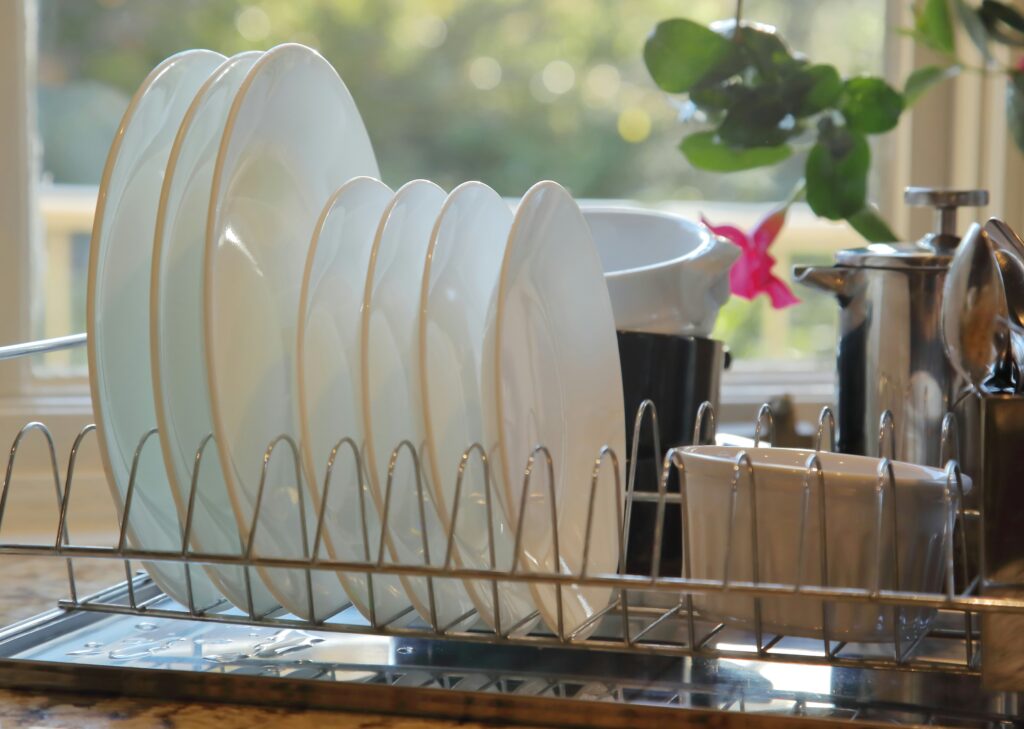
A sleek stainless steel drying rack holds clean white plates, showcasing a tidy and sunlit kitchen countertop.
Why a Quality Dish Drying Rack Matters
A dish drying rack is more than just a place to stack wet plates. If you’ve ever ended up with water puddles all over the counter or annoying water spots on your favorite dishes, you know the right drying rack can make a real difference in the kitchen. When you choose the right one, it can help reduce water spots, keep dishes from sitting in standing water, and keep your countertops from turning into a soggy mess.
I’ve definitely had those days when the counter around the sink seems to collect everything at once-wet plates, bowls, glasses, and little puddles of water. A good drying setup makes that daily mess much easier to deal with.
Whether you’re redesigning your kitchen or simply replacing an old rack, it pays to know what actually matters before buying one. A little thought upfront can save you from ending up with a rack that looks nice but doesn’t work for your kitchen.
Beyond basic drying, a well-chosen rack can make the whole kitchen workflow feel easier. In busy households where multiple meals are prepared each day, dishes can pile up quickly. Without a proper place to let them dry, wet plates often get stacked wherever there’s room, which can increase the risk of cross-contamination and surface wear. A stable, well-ventilated rack lets air move around the dishes, helps shorten drying time, and means you won’t have to keep reaching for a kitchen towel to dry everything by hand.
That alone can make the sink area feel a lot less chaotic.
Material Choices and Their Benefits
Stainless Steel
Stainless steel is one of the most popular choices because it’s durable and resistant to rust. It works especially well in modern kitchens and pairs nicely with other metal fixtures. High-grade stainless steel is also easy to clean and tends to keep its appearance over time.
Bamboo and Wood
Bamboo gives the kitchen a warmer, more natural look and works nicely with rustic or Scandinavian-style interiors. It’s an eco-friendly option, but wood does need a little more care. It should be oiled occasionally and shouldn’t be left sitting in standing water for long periods.
I like the look of wood, but the extra maintenance is something I’d keep in mind before choosing it.
Plastic and Coated Wire
Plastic racks are lightweight, often more affordable, and easy to move around. They also come in a range of colors, which can be useful if you want something that blends in with your kitchen. The downside is that plastic can stain over time and generally isn’t as heat-resistant as metal options.
Design Considerations for Different Kitchens
Countertop Models
Countertop racks are the most common option and usually sit neatly beside the sink. They’re a practical choice for households that regularly hand-wash dishes. If you’re considering one, look for a design with a removable drip tray so you can clean underneath it more easily.
That drip tray is one of those little details you don’t think much about until water starts collecting underneath the rack.
If you have a bigger household, a two-tier countertop dish rack can give you some much-needed extra space. This MAJALS model↗ has a rotating drainage spout and a separate utensil holder, making everyday dish drying a lot less of a hassle. I love that the rotating spout lets me direct the water straight into the sink, so I don’t end up with puddles all over the counter. And since it sits right on the countertop, there’s no drilling involved, which makes it a great option for renters, too.
If you need even more room for plates, bowls, and kitchen gadgets, this niffgaff 3-tier dish rack ↗ is worth a look. The vertical design makes better use of your countertop space, and it comes with a few useful extras, including a cutlery holder and a slot for your chopping board. It’s made from coated iron with an anti-rust treatment and has plenty of room for everyday dishes without feeling wobbly. I love how the extra tier gives me room for bulky cookware and chopping boards without taking over the countertop. It’s a practical option if your kitchen is always busy and you have a lot of cookware to deal with.
Both styles help keep your countertop neat while giving you options for different kitchen sizes and storage needs.
Over-the-Sink Racks
For smaller kitchens, an over-the-sink rack can make good use of the space above the sink. These racks often have extendable arms that allow them to fit different sink widths.
I’ve seen these make such a difference in tiny rental kitchens, especially when there’s barely any counter space to work with.
Wall-Mounted Options
Wall – mounted drying racks free up counter space and can even add a decorative element to the kitchen. They work best when installed close to the sink and at a comfortable height.
Wall-mounted racks are brilliant for reclaiming counter room, yet I always verify the wall structure before making any holes.
Just keep in mind that this type of dish rack may not be the best fit for renters who can’t drill holes into the wall.
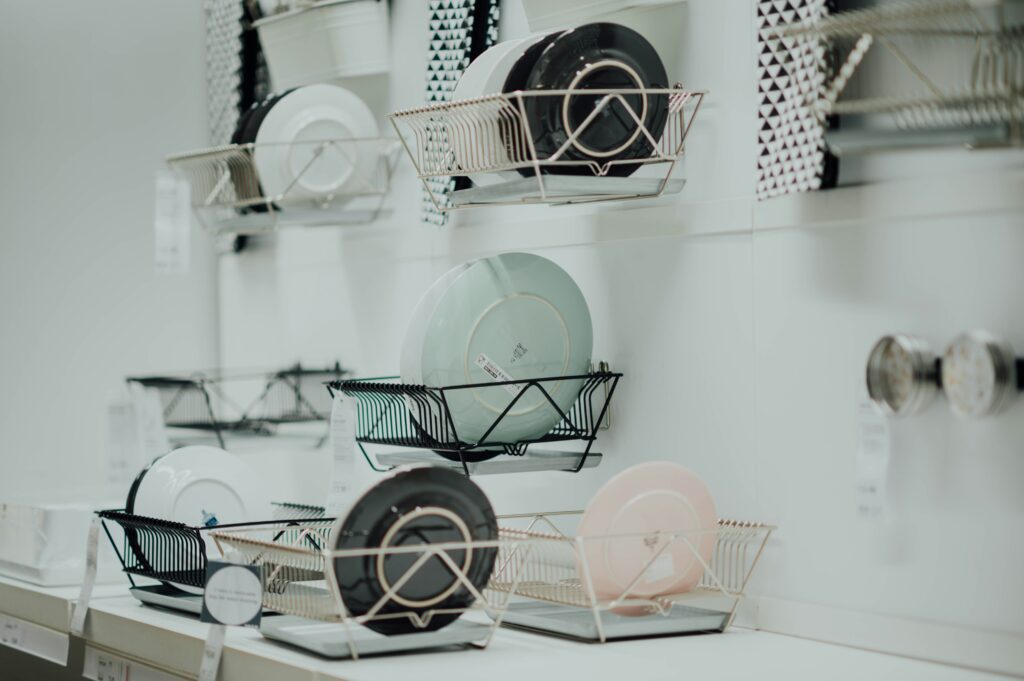
Different styles of dish drying racks for home kitchens, including countertop, over-the-sink and wall-mounted dish racks.
Features That Improve Daily Use
When I’m looking at dish drying racks, these are some of the practical details I’d pay attention to:
Sloped Drain Boards: Help direct water back into the sink instead of letting it pool on the counter.
Adjustable Compartments: Make it easier to arrange the rack around different plate sizes, bowl depths, or glass heights.
Utensil Holders: Keep cutlery separated and upright so it can dry more quickly.
Non-Slip Feet: Help keep the rack from moving around during use and protect the countertop surface.
Foldable Frames: Handy if you’d rather put the rack away when you’re not using it.
These features might seem minor, but they’re the kind of things you notice pretty quickly in everyday use.
Maintenance and Hygiene Tips
To keep your dish drying rack in good condition:
Empty and rinse the drip tray daily.
Wipe down metal frames to help prevent mineral buildup.
Occasionally sanitize with a mild vinegar solution.
Avoid leaving damp cloths or sponges inside the rack.
For wooden racks, apply food-safe mineral oil monthly.
A little regular maintenance can help extend the life of the rack and keep the kitchen environment cleaner and healthier.
It’s also important to choose a rack based on how your household actually uses the kitchen. Larger families will usually get more use out of wider racks with higher capacity, while smaller households may prefer something compact or foldable. The cookware you use matters, too. Oversized pans and delicate glassware can affect which rack configuration makes the most sense.
Take a minute to think about what usually ends up in your drying rack. It can save you from choosing a setup that looks convenient but gets in the way of your normal routine.
Common Mistakes to Avoid
Overloading the rack: Too much weight can cause the rack to tip or warp.
Ignoring drainage: Standing water can encourage mold and unpleasant odors.
Choosing the wrong size: A rack that’s too large can take over your counter, while one that’s too small can leave you stacking dishes on top of each other.
Placing it too far from the sink: This makes it easier for water to drip onto the floor or nearby cabinets.
Ignoring wall installation limits: Wall-mounted dish racks need to be securely mounted, so drilling into the wrong type of wall can cause damage. And if you’re renting, you may not be allowed to drill holes at all.
Final Thoughts
Choosing the right dish drying rack might seem like a small upgrade, but it can make your kitchen feel a lot more organized and much easier to keep clean. Pay attention to the material, the design, and the features that actually fit the way you use your kitchen, and you’ll end up with a rack that feels like it belongs there.
For me, that means less stuff piled up around the sink, fewer annoying water spots, and a drying area that works with my routine instead of getting in the way. Those little kitchen wins can make everyday cooking feel so much easier.